Does anyone have advice to help my snakes after Chlorine Gas exposure + evacuation?

Full disclosure I am also posting this on the corn snake subreddit to try and get the most advice possible, and I’m sorry if this comes off as spammy. I’m very worried about my snilds health and comfort since they didnt

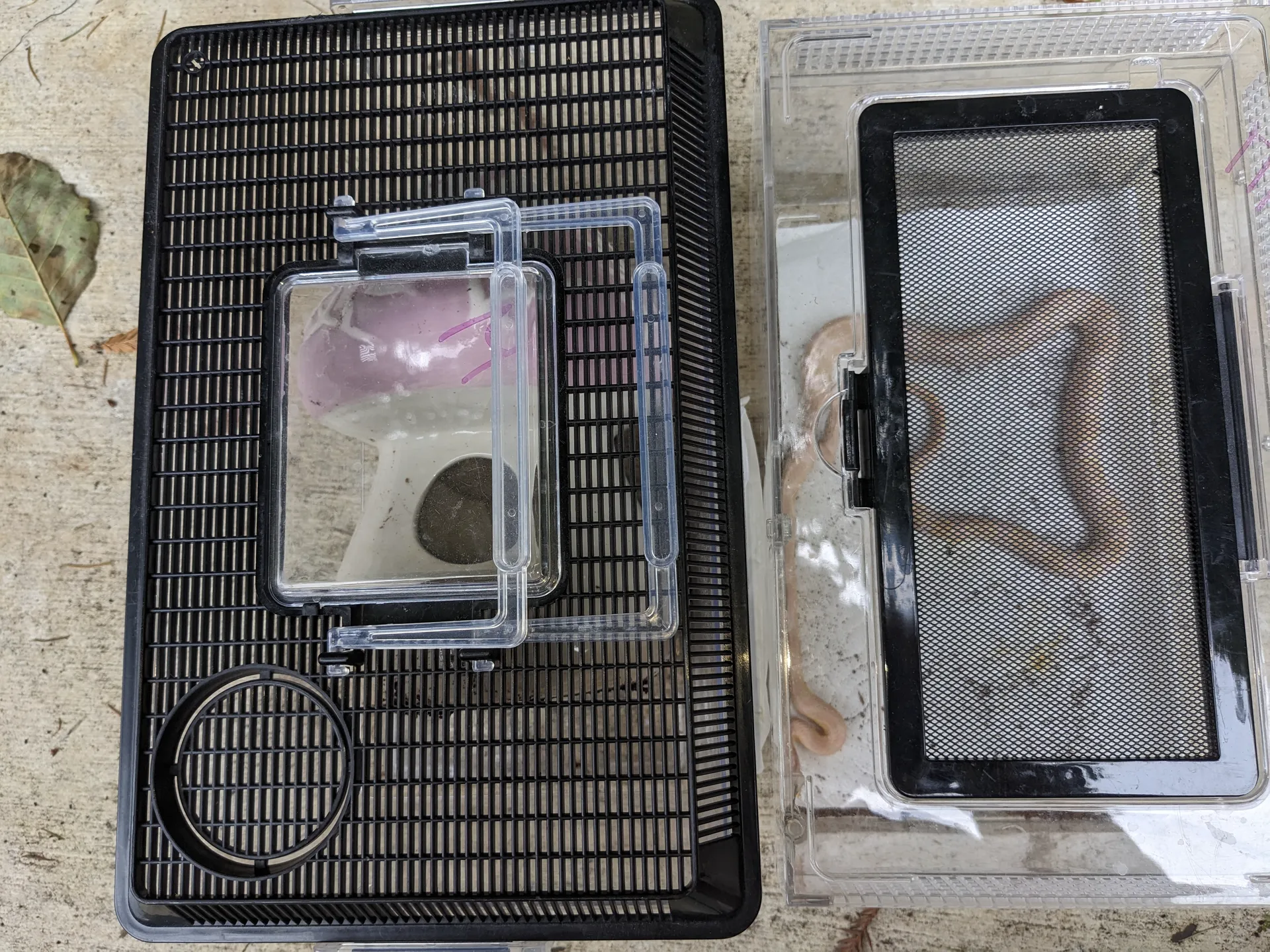
I ended up having a cleaning mishap in my bathroom today and am currently outside after evacuating with my snilds. I immediately put them in their old feeding tanks and got them outside before I went to open all the windows. While it isn’t raining, we’re in the PNW and its pretty cold already. They currently have a shipping heating pad between them to hopefully keep them warm (which is my current plan for a power-outtage and I would love input on a better system, I have three, well now two, 72hr heating pads that I was hoping could get me through a week long power outtage).

However, my small boy Eros, who was fed less than 24hrs ago regurgitated once last year due to a bad mouse, and I am worried this stress, either from the sudden evacuation or Chlorine gas exposure, will cause him to regurge again. He is currently pressed against the Is there anything I can do to prevent it, he still has a small visible bulge.

Also, does anyone have any advice to make an evacuation process smoother/less stressful on them? Is there anything I can do to make them more comfortable since we’ll probably be out here for another hour? I’m planning on implementing poison control’s recommended procedure (20 minute steaming hot shower + immediate changing of clothes) since I am experiencing symptoms of exposure, but I’m wondering if I can do anything to help alleviate any symptoms they’re experiencing, is this something to take them to the emergency vet for? I believe they were exposed for <5 minutes but I cannot be sure the exact time.

For a timeline of exposure, I was in the bathroom (which is nearly directly across the hall from my snake room), with the door shut. I rinsed the tub with vingar, lightly rinsed with water, then sprayed everything with clorox mindlessly.

After immediately breathing it in I realized what happened, ran out, shut bathroom door, and grabbed snakes out of tanks to bring outside.

Afterwards I went in and opened every window in the house, opened the bathroom window, then turned on the shower to leave running (which was *really* not a good idea; I suspect it caused the main symptoms for me), and got the heating pad for them.

We’re now currently all outside tracking my airgradient to see when it’s safe to enter my house again (plus a 15 minute wait to ensure every room is safe). Should I go to the emergency vet to get them checked out? Could I try to add steam to their tanks to help once we’re back inside?
1 Like

I’m neither a physician nor a vet, but I suspect that if you’re not in the ICU right now having been in the room, the snakes in another room behind a closed door are 100% fine.

I’d recommend not exposing the snakes to steam.

7 Likes

I think they’re probably fine since they were in a separate room and you got them out right away, but if you don’t think it’s safe to bring them back inside yet could you put them in the car and leave it running with the heat on?

6 Likes

It sounds like you actually have things under reasonable control. The snake who was recently fed is the one who most needs access to the heat. Corns are pretty hardy, and unless your area is going to be down in the 40s, the ones who haven’t eaten recently would be perfectly fine without any supplemental heat.

If the snakes had actually gotten significant exposure, you would already know it. If they are not showing any respiratory distress, or visible chemical burns, you can consider them likely safe. Chlorine gas is a heavy gas, compared to the vast majority of what is in the air. This means it sinks, and also affects the rate at which it spreads through a room. Ventilation obviously matters, too.

It’s true that this could have been lethal for them and for you. You took prompt action and it wasn’t. Things will be okay.

Edited to add: no, there’s no need to add steam or anything else to their enclosures. The gas will dissipate on its own. That’s maybe the only good thing about accidentally making Cl2 (chlorine gas). The only cleanup environmental cleanup needed is ventilation. (Former chemistry teacher who did LOTS of labs. Yes, it’s possible to have a massive Cl2 contamination which needs professional cleanup but a simple household cleaning accident isn’t of a quantity to be such an issue.)

4 Likes

I don’t currently have my car with me, but we’re back inside after 4 hours of letting everything air out. While the smell/gas is fully gone, I’m keeping the bathroom and snake room doors shut with fans on windows open for the night. they both seemed very happy to be back in their tanks are are hopefully no worse for wear!

3 Likes

Thank’s for the quick reply! We’re now inside after letting it dissipate for about 4 hours. It was about 55f out there which definitely wasn’t ideal but my boy who ate yesterday seemed pretty calm after a short time and was next to the heat pad until we went in. The snakes seem ok and were happy to go back to their tanks so I’m hoping for no regurges. Is there anything you would recommend if we need to evacuate in the future, I’m thinking about getting disposable hand warmers to keep for power outtages since the shipping heating pad was far colder than I thought it would be. There’s a good chance we’re going to have some rough weather this winter and I want to make sure they don’t freeze if we’re out of power for a while.

I am planning on seeking medical treatment tomorrow since I stupidly took a breath automatically when I re-entered the bathroom to open the window+turn on the water, which worsened the symptoms I experienced after the initial reaction. I really hope my little guys didn’t breath any in. They seemed very confused as to why they were being dragged outside.

Also, funnily enough I’m currently taking a difficult chem course at my university, and was rushing through the cleaning so I could practice redox reaction problems since I’ve been struggling and it’s review material from previous units! I’m kicking myself for not realizing what I was doing since it was so obvious in hindsight.

2 Likes

Both shipping warmers and hand heat pads are designed to be used to add heat to a space – a styro box, and the inside of mittens, respectively. They’re going to feel cold out in the open since the heat dissipates. But hand heat pads can get hot enough to be dangerous to reptiles (so can shipping heat pads if misused, of course).

For a temporary evacuation (none of anyone’s business, but does this happen a lot?), and trips to the vet, a good styro box is very useful, even without chemical heat pads if the use is only for a few hours. Molded ones hold heat a lot better, but panel boxes can be broken down and so are easier to store when not in use.

For longer term situations like a power outage, there are some options. Depending on your climate, species and house, maybe nothing is needed if your house doesn’t get too cold without heat and your reptiles are tolerant of temps.

We have a generator, but that’s a substantial outlay and only good for certain housing situations. But the advantage is that it can provide power as long as you keep putting gas in it.

A lithium power station (sometimes misleadingly called a “solar generator”) can be useful in shorter power outages. We have two Jackery power stations – a 1000 and a 3000 – and there are less expensive brands that are probably decent. You just need to figure out how much power you will need to draw for what period of time. The 1000, for example, would run two 20w heat mats for 25 hours total (since it stores 1000 watt hours of electricity).

If power outages are common, thinking about optimizing their enclosures for that possibility might be worth it – I’m thinking here of using PVC enclosures rather than glass, since glass enclosures are very wasteful of heat.

3 Likes

Thankfully this is our first time ever having to evacuate (and hopefully the last), though twice we haven’t had clean water due to a pipe breaking down the street but I just gave them bottled water then. While we were lucky and didn’t have any outages last winter, based on the current forecasts I want to have a plan for a worst case scenario where we’re without power for a few days. My house gets pretty cold, though my snake room and bed room are the warmest rooms in the house. In the case of a power outtage It’ll probably get down to the 50s in their room. I’ve been looking into getting a lithium power station, though I haven’t gotten one yet, but I will probably try to order one this week. Thank you for the great advice!

3 Likes

These are all good tips I’m logging in my own to-do list. I haven’t even thought of emergency prep but this is such a good reason to get myself in gear!

I’m glad everyone seems to be settling down. If your snake does regurge, at his size, it won’t be the end of the world. Just give him a couple weeks to recover, feed him a half-size meal with nutribac, and if he handles that well, go right back to normal.

Well done on putting the health of your animals as top priority. it sounds like they’re in good hands.

3 Likes

Glad everyone is doing well. Good on you for the prompt action. Hopefully the one who had just eaten won’t regurge. Since the time outside was only 5 hours at 55°F and he had supplemental heat, I wouldn’t expect him to regurge based on lack of heat. I think it will depend more on his temperament and how he handles all of the unexpected activity. Some of them take virtually everything in stride. Some are more easily unsettled. You’ll probably know with 24 hours if he’s going to regurge based of having felt more frightened than safe.

Hand warmers get much too hot, dangerously hot for your snakes. Remember that even their warmest safe temps are only in the 80s°F.

1 Like

Excellent! Planning for emergencies is the best way to get through them safely. Here’s my advice for power outages when the weather is cold and potentially hazardous for your snakes. I wrote it in response to a previous customer’s concerns, but it applies generally. I’m referring to the snake as “he” because the person who asked has a male snake. Same advice goes regardless of sex.

We’ve got a widely distributed family and Winter (capitalized intentionally) is very formidable at times. Big kudos to you for being proactive in preparing.

AHEAD OF TIME: Have at least one shipping heat pack on hand for each animal. These are sold by expected time of use, such as 40-hours or 72-hours. Buy the ones with the longest time for emergency use. These packs are activated simply by opening them and exposing them to air. Oversimplified, the heat is produced in an exothermic chemical reaction between oxygen in the air and iron in the pack. It’s a one-time thing.

IF THE POWER GOES OUT, activate the pack. Basically, open the pack and shake it well. When you open it, the contents should shake. If it’s hard and solid, its wrapping was compromised and it’s already completed its reaction so it won’t work. Wrap it loosely in something like a towel to activate it and just feel it in half an hour or so to be sure it’s warming.

AHEAD OF TIME, BEFORE THE EMERGENCY: Have something small in which to put tor animal(s). A styrofoam container or a chest-tupe cooler for them and/or their container is ideal for heat retention. Something like a shoebox size tub or a critter keeper, or something even smaller if you have baby snakes is the best option if the power goes out.

WHEN EMERGENCY SEEMS LIKELY: Go ahead and put some bedding in the temporary enclosure. Add at least some from the snake’s home as the familiar scent may help him feel secure in a potentially stressful time. If you’re in a situation where an extended power outage is expected, and if there’s room for it, put the snake’s emergency quarters inside his main viv so he can explore and get accustomed to it.

He’ll need a warm hide for the smaller container. The hide can be a simple as a box or a small styrofoam container such as an egg carton which is least partially cut away on the bottom. They actually love those, and they hold warmth well. You can put this in a warm spot in his main enclosure while you have power so it’s warm and also for his acclimation. Of course you can put whatever hides or decor in his emergency housing, especially if there’s a favorite item and it fits. A choice of hides is always good.

IF POWER GOES OUT AND IS LIKELY TO STAY OUT: Activate a heat pack. Put him in the smaller container with bedding, water, and hide(s) and put the towel-wrapped heat pack near its end or side. DON’T PUT IT BENEATH HIM. He won’t be trapped beside the heat pack in his larger container, so he should be able to get where he needs to be for his body. Wrap a towel or blanket loosely around the whole thing. If you have a way to enclose it all in a box orc ooler or something, that’s good. IMPORTANT: Both the snake and the heat pack do need to have oxygen so don’t put it in something airtight. That should be good and safe for a minimum of 72 hours, especially if you don’t open the wrapping around his container. He won’t be getting his usual amount of light, but that is not the crucial factor in an extended power outage. Remember that snakes don’t mind enclosed dark places the way we do and resist the temptation to open the container unless the time expected for the heat pack has passed and you need to replace it.

One more thing, try to ensure that he’s not digesting a meal when a power outage happens. I know it’s impossible to predict this at times, but if you have a window where you know you’re seriously facing that possibility, don’t feed him right before then.

Hope that all made sense. Please ask if it didn’t or it you need more clarity. I hope your entire household is able to stay safe and warm through whatever the future may throw at you!

5 Likes

Thank you, I’m saving this to reference during outtages!

1 Like

You’re welcome. Hope it’s never needed!