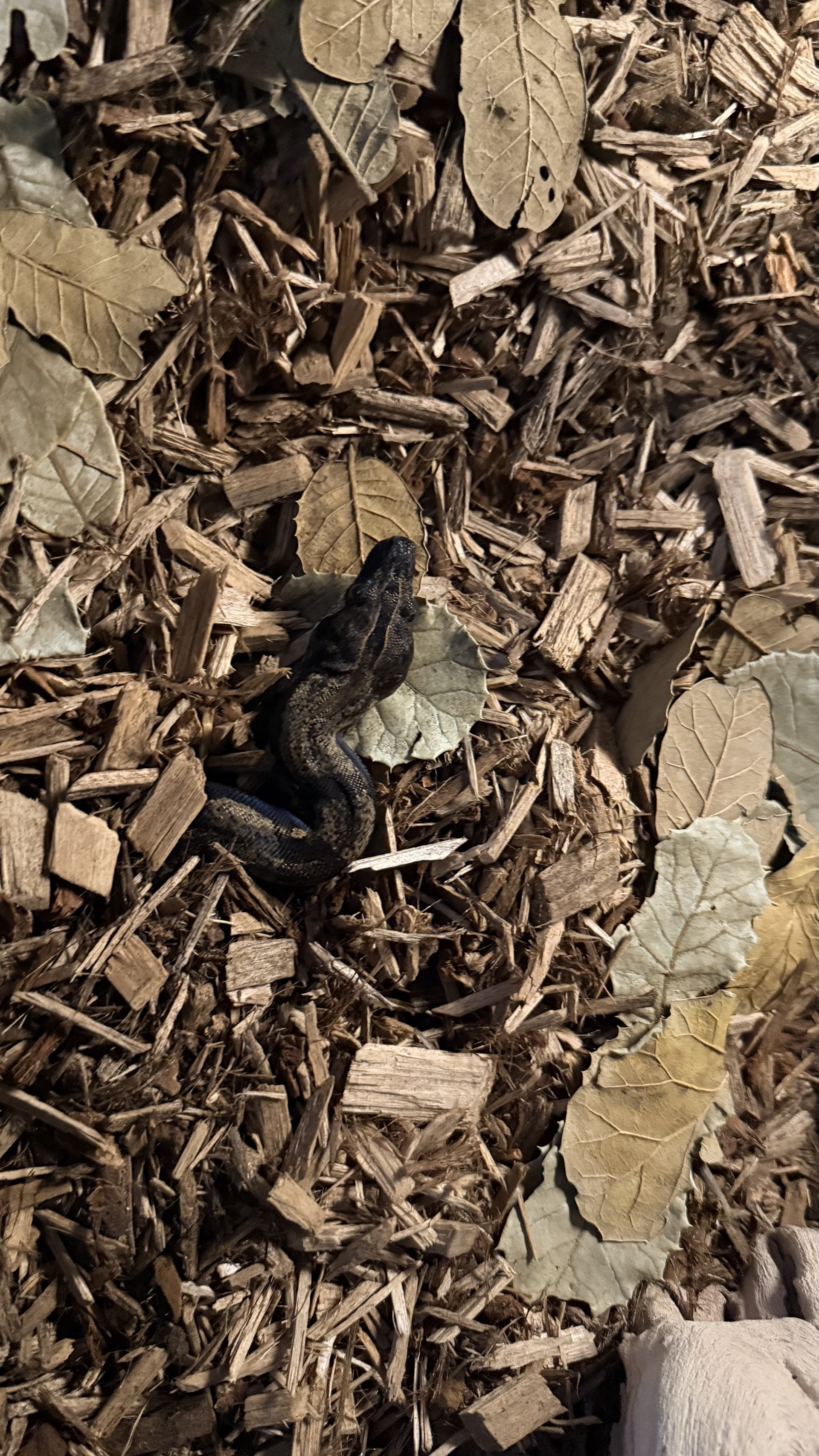
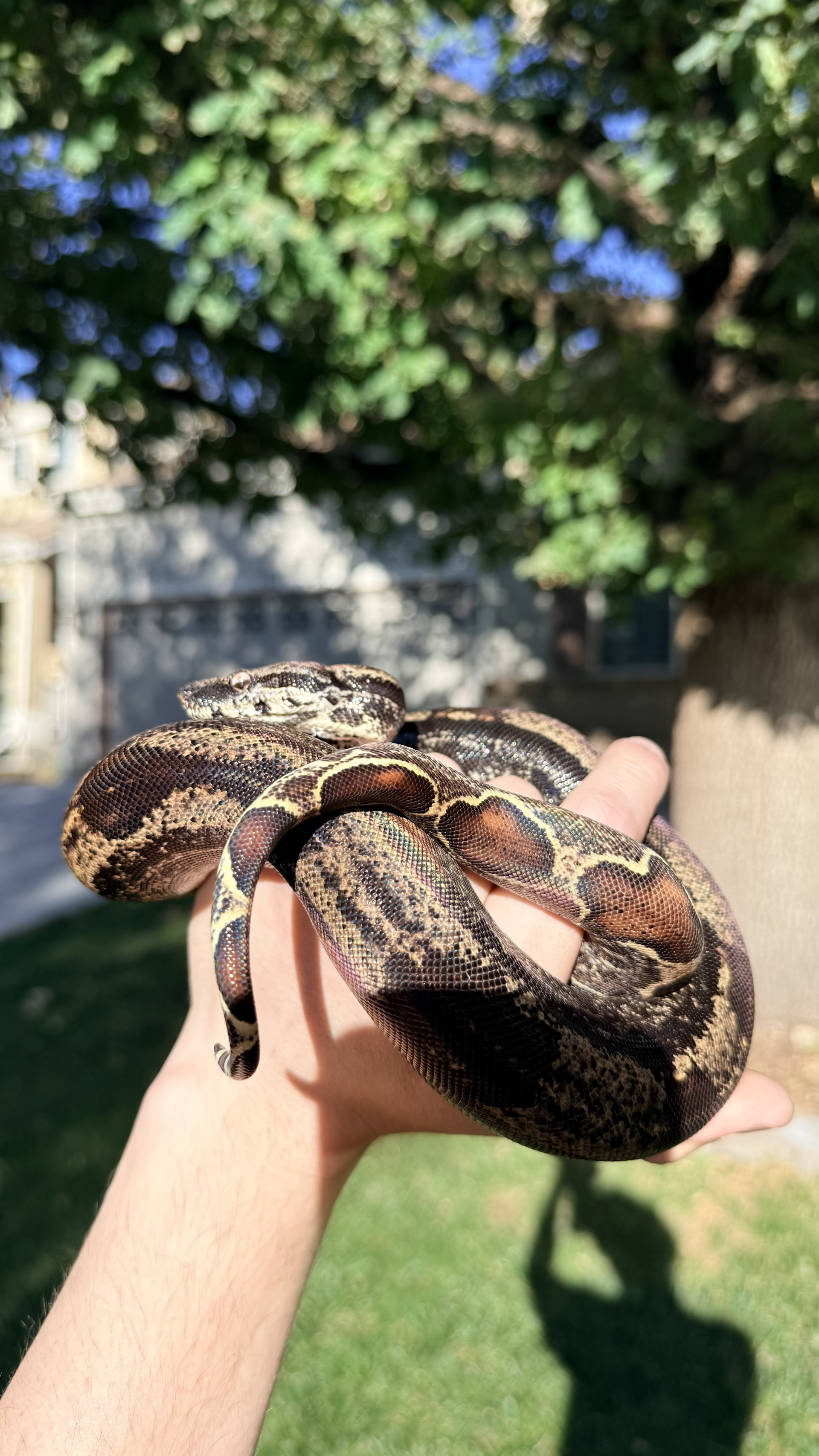
Recently acquired this handsome fella from a show. Going on 4 weeks now. He has eaten three times now in this enclosure. 4x2x2. Radiant panel on the VE. He is staying burrowed and hidden most of his time with me now. I am reading that this can be normal, but also reading this can be signs that I’m doing horribly at keeping him happy and secure feeling. His warm side is 85-86 cool side around 79-82. Lots of hides, natural and plastic, large and small.
I am new to snakes. I have 5 others that have all gotten along quite well, but this is my first BCI. Any help or thoughts would be greatly appreciated!
As for the burrowing that is a bit odd to me, I’ve never had my BCI burrow in the 17 years I’ve had her, but she’s my only Boa Constrictor so I don’t know how universal this behavior is…
@tommccarthy has been keeping Boas longer than I’ve been alive so he may have insight into this behavior.
Your hot side needs to be dialed down to no higher than 85 degrees. Since you are using overhead heat he is too hot at 90 degrees. So he burrows to get away from the heat.
If it turns out not to be a husbandry issue, it could be because the little guy is still relatively new. 4 weeks is really not super long in snake world. But of course I would double check to be safe.
He looks good and I wouldn’t worry about him burrowed and hiddening. I have some boas do this over the years. More so with babies and sud adults. Just adjust your heat temperatures, as people have said.
It absolutely is still early! I would just much rather ask than assume I know what I’m doing by having a few things right and cause him discomfort. I really appreciate your reply and ISNT HE GORGEOUS…
In my opinion it’s safe to start handling him now for short interaction.
Most captive-bred boas often become quite tame with regular, gentle handling and are less prone to defensive behavior. Hook training helps with this. Start this from when they are babies. Gently tap their head or body with a snake hook. Every time you go to take them out of their cage or cage cleaning day. Don’t use the hook on feeding days. They will associate the cage opening and hook training with interaction with you and tolerate handling well and can become calm, predictable pets when socialized.
Never restrain a boas head with your hands as they don’t like this at all. Remember, a restrained boa is a mad boa. I know I don’t like being held by my neck or head.
When handling your boa, do not have a death grip on it. Let it go where it wants for the most part. Just hold them loosely but in control of them and let them move around and change your hand position by going hand under hand as they move around. You can still direct it so you have control of it. Never put your hand directly towards its face. Always guide under it’s chin and a few inches back from the neck. Keep it moving, and it will not have time to think about biting you.
If your boa stops moving, they may start thinking about biting. So keep them busy with moving around.
I personally keep all of my boas under heat panels with a 88-90F hot area. In my 4x2x2’s I have basking shelves, so I keep the top left corner where the panel is at 88-90F above the panel, the corner on the bottom right furthest from the shelf I aim for 80F give or take, and that leaves the other 2 corners sitting at around 85F. I personally feel 85F is too cold for a hot side, and too much below 80F is tool cold for a cold side. A 4’x2’x2’ isn’t large enough I would like to let it fall below 80F personally, but in the winter it’s difficult to avoid. I usually have a hot corner at 88-90F, but the coldest sits at 70F, the corner above the shelf opposite the panel is around 75, and the corner below the shelf where the panel is stays around 80F. At that point, they are hardcore hogging their heat most of the winter. If they’re stacked, they push their bedding aside and plant themselves on top of where the panel in the cage below them is.
That said, burrowing is normal and just a part of how they behave!
Do you or anyone have any insight into whether this sort of behavior has been documented as typical in wild specimens of the species or genus, or whether it is an artifact of captivity? This is a question I’m interested in for herps generally, since burrowing/so-called fossorial behavior is often a response to captive conditions.
No, but I’m sure it’s normal in the wild too. They could burrow for warmth, escape from the heat, to get moisture in the leaf barrier, or to hide from predators/ambush prey. My boas rarely burrow, but it’s not always paired with something that needs changing. Breeding season behavior can trigger it too, and there’s not always an obvious reason. I’m about to move them into the house, though, so guess we’ll see if that changes. I’ve had a dedicated room for over 10 years now and they’re going to the living room. But I can’t afford another 500-600 dollar power bill this year, and if it stays that high even bringing them in and turning off central heat, then I’m starting some trouble over the bill. And hopefully by this time next year I am settled in a new place…
Yes, I know they could. Pretty much any animal could burrow. But knowing whether they in fact do so is the only way to establish whether it is a “normal” behavior for them as a species (with this taxon, probably this is different among locales) or rather “normal” for the sort of conditions they’re kept; if only the latter is true, then we can learn something about our husbandry.
I don’t think it’s helpful to try to pin a husbandry mistake on the behavior as a whole. Sometimes snakes just do things because they like to, you could unnecessarily judge you or other people over a behavior snakes just do.
I think there’s a misunderstanding here. I’m not judging; I’m trying to figure out good captive care, and since there might be some knowledgeable boa people reading I thought I’d ask about one small point.
I have been approaching husbandry from the standpoint of natural history observations combined with captive results. Neither basis is sufficient by itself; the “recreating wild conditions” approach is patently untenable for both specific and general reasons, and the “works for me” approach both leads to a lot of bad care being repeated and doesn’t really allow for much increase in husbandry quality.
Probably the most straightforward outline of the sort of combination approach that I think valuable is laid out in this paper, which some might find interesting:
Utilization of Natural History Information in Evidence based Herpetoculture: A Proposed Protocol and Case Study with Hydrodynastes gigas (False Water Cobra), Zachary J. Loughman, Animals 2020, 10(11), 2021; https://doi.org/10.3390/ani10112021