UVB and immune response in reptiles

It is often claimed that UVB exposure improves immune response in captive reptiles, and that this is a separate matter from the (relatively uncontroversial) fact that many herps can synthesize Vitamin D3 when exposed to UV light.

This claim about immune response is common on internet forums, of course:

“It is a health benefit to provide UV […] improvements to immune response” (https://www.reptileforums.co.uk/threads/snow-hognose-uvb.1297778/)

“Just as uvb is so important for their immune systems” (New to pvc tank ventalation question and heating - #9 by auriea)

"UVB lighting […] strengthens the immune system, " (https://community.morphmarket.com/t/care-guide-boas-amazon-tree-boas/41434)

It is claimed by those involved in marketing animals and supplies:

“Adequate UVB exposure has been linked to a strengthened immune system in reptiles.” (https://showmereptileshow.com/resources/the-importance-of-uvb-for-reptiles)

“Benefits of UVB for reptiles include […] Stronger immune response.” (UVB and Your Reptile | Reptile Supply)

Oddly, though, I can find no evidence supporting these claims. Papers that are relevant do not address possible immune system benefits. One example:

Grosset, Claire & Péron, Franck. (2020). Effect of ultraviolet radiation on vertebrate animals: update from ethological and medical perspectives. Photochemical & Photobiological Sciences. 19. 752-762. 10.1039/C9PP00488B.

And some publications note exactly the opposite (note: UVR = ultraviolet radiation):

“UVR has been shown to produce negative effects on the immune system” (Usually, a ‘has been shown’ claim invites further research, but I could not find a public copy of the citation for this claim).

" The immunosuppressive properties of UVR are of major biological and clinical relevance."

" UVR can cause innate immune activity alteration, which could possibly lead to the impaired response of exposed individuals to infections, increasing their incidence and making them more lethal."

“artificial UV should be considered a potential hazard if it is not properly managed and this should be taken into account by those dedicated to reptilian husbandry and maintenance facilities design.”

Poletta, et al, Reptiles as Animal Models: Examples of their Utility in Genetics, Immunology and Toxicology, in Lutterschmidt, 2013, Reptiles in Research: Investigations of Ecology, Physiology and Behavior from Desert to Sea

This thread is created in the interest of sharing published or otherwise documented immune system benefits from captive UVB provision in reptiles. Got a citation? Put it in a reply. Thanks. :slight_smile:

3 Likes

I will link this one:
Dietary Vitamin D3 and UV-B Exposure Effects on Green Iguana Growth Rate: Is Full-spectrum Lighting Necessary

It’s a short study over 6 months, but started at 3-4 weeks of age. So the dietary requirements are pretty high during that period for D3 and Calcium.
They had do reduce the UV during the study because of ill effects. Started at 6 hours and dropped them to 1.5hr a day.

Not quite an immune system benefit. But the radiation effects seem like a good point to bring to the table

2 Likes

I’m so glad you guys are discussing this! A lot of this is beyond my comprehension but I understand the general idea……:+1:

4 Likes

Thanks. It is hard to evaluate that study. I couldn’t find any info on the lamps used (Phillips F40UVB), and I’d have to convert the UV measurements to UVI (have to look up the formula) – though the lamps might have a non-solar spectrum and so be impossible to convert.

I think the fact that some died apparently from the UV entails that it was a radical overexposure – not completely unlike studying dietary iron by feeding them nails. Oddly, we were using UV lamps (ZooMed’s ‘Iguana Light’ 5.0 T12) in the mid 1990s, so I’m not sure why this study in 2004 was so oblivious.

2 Likes

OK, I found some info on these. These lamps are not solar spectrum, and so there’s no simple way to convert the measurements in the study to UVI. Using a standard formula, I get a UVI of 20 at 30cm – which may actually not be too far off given the symptoms they reported, but there’s no way for me to say.

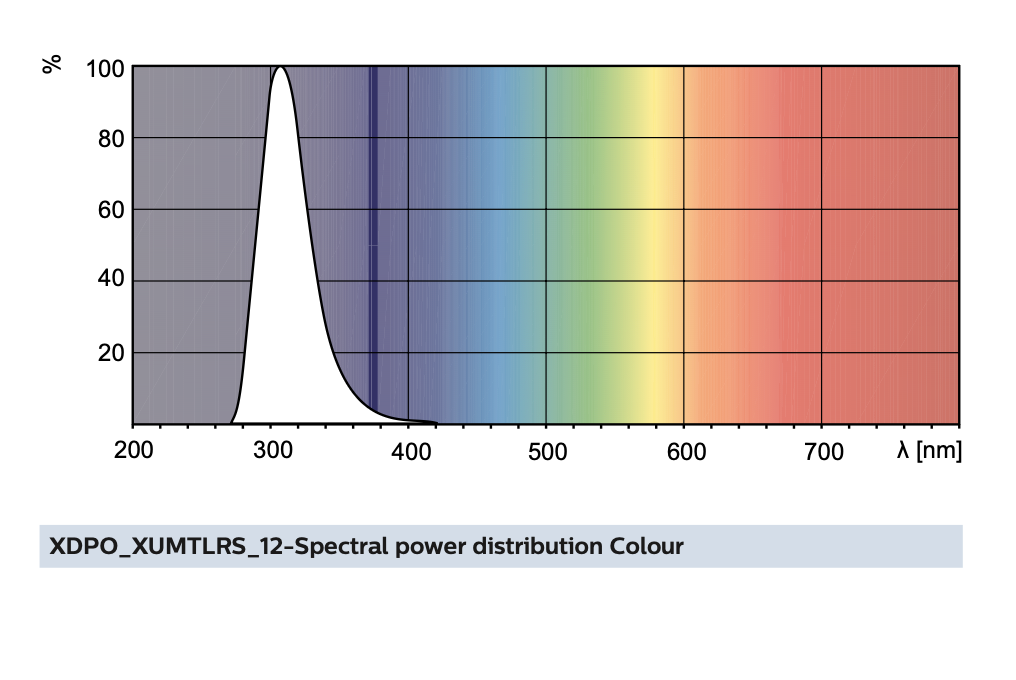
These lamps – Philips F40UVB (TLAW/12/RS) – are a UVB-only lamp designed for “phototherapy, agricultural processes, and industrial curing applications”. That is, they’re not at all a reptile lamp.

https://www.cureuv.com/products/tl-40w-12-rs-slv-25-uvb-broadband-tl-philips-lighting-bulb

The spectral curve is frightening.

This shows that the lamp emits mostly only UVB (280 – 315 nm), with a peak around 305nm. This entails that the feedback loop that degrades excess D3 using wavelengths of 315-335nm won’t work – thus causing uncontrolled D3 production.

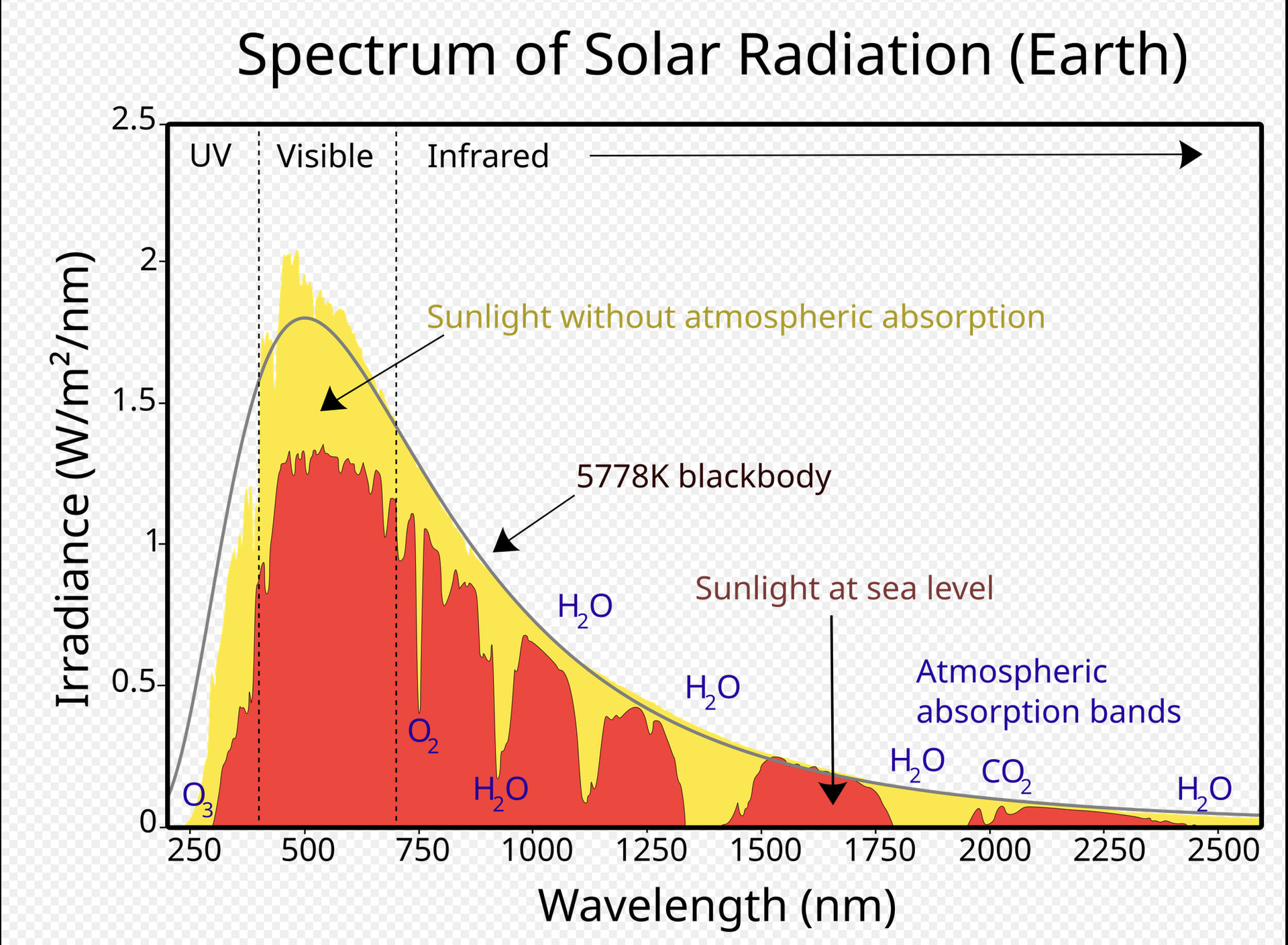
Here’s a graph from Wikipedia, showing the spectrum of sunlight (the red area):

Notice how the spectrum increases very quickly on the right side of the ‘UV’ column? That shows that sunlight has a lot of UVA compared to UVB (95% UVA to 5% UVB), which is needed for safe D3 production in the skin.

Given the vast difference of these lamps from both natural sunlight and all florescent UVB lamps currently on the mainstream US herp supply market, no conclusions from this study can be drawn.

3 Likes

This supports something I have been preaching for years about the hobby being too obsessed about UV usage and basically overdosing our animals on it. This is also why I have habitually used a lower “power” UV bulb that what is recommended for a given species and have my UV set to random on/off periods only from noon to 3p. With rare exceptions (things like chuckwallas and Uromastyx) I suspect very few of our animals need more than about a thirty to sixty minute daily exposure. Very few species sit out in full sun all day every day. Despite this, the hobby actively promotes running UV for ten-plus uninterrupted hours every day
.
.
.
As far as reptile specific publications supporting UV and immune benefits, most everything I have seen has been based on extrapolating from the data presented in studies on other model organisms. It is widely established from the whole of those studies that UV does play some benefit in immune system performance. That said, I do not believe there is any one-to-one level comparison that can be drawn because the vast range of effects (positive and negartive) and the huge number of variables across all of those studies simply have not been (and perhaps cannot be) properly aggregated to anything beyond a broad-strokes conclusion of: Some UV exposure is better than no UV exposure. And honestly, that should just be a no-brainer - 3.5 billion years of evolution under a giant radiation emitter has kind of biased the life that lives under that radiation to gain some degree of benefit from it (with the obvious exception of the few known things that never have any exposure to any of the byproducts of that radiation)

4 Likes

Yeah, it supports the same thoughts I’ve had about the death rates you see in bearded dragon hatchlings sometimes. The desert 10.0 lights on a 10 gallon enclosure is a lot.

3 Likes

Could you link a couple, or ideally a systematic review? Then we can see the specific conclusions, and also judge whether and to what degree extrapolation to herps is warranted.

This is a pretty common defense of captive UV use – in herps, anyway. We don’t see this in the aquatics or arthopod hobbies. I don’t keep any birds (in the house), but a look at online discussions suggests that UV is quite a bit more contentious than it is in the herp hobby. I don’t suppose any small animal keeper groups are gung ho about providing UV.

Anyway, one issue from the evolutionary understanding POV is that it presumes that factors in the natural environment of an organism are all (or mostly, or even lean toward being) beneficial. That’s a hard case to make. There’s more of a case to be made that living things need primarily to protect themselves from UV exposure – through pigmentation, hair/fur/feathers/scales, hiding in shade (or under a layer of self-applied dust or mud), crepuscular and nocturnal activity patterns. We know that UV exposure damages living things, which is a reason to suspect it more strongly selects for adaptations that protect against it rather than exploit it. And the ‘3.5 billion years’ comment calls to mind microorganisms – which were the only inhabitants for most of that time and are exactly the wrong organisms for making the case for the benefits of UV.

The ‘ubiquitous = beneficial’ assumption has plenty of analogous counterexamples, too. Parasites are everywhere, but we assume they’re detrimental until evidence exists otherwise. Extremes of temperature and moisture are the same: we assume that the extremes of annual cycles are worth replicating in captivity only if we identify an actual benefit (such as reproductive cycling). Heterospecific animals sharing the local environment are common in the wild, but the default assumption in captivity is at least ‘slow down and think this through’.

And of course, whether the ‘some degree of benefit’ involves immune response can’t be established on this argument. I think it is worth analyzing each claim in support of captive UV use, without resorting to the ‘general benefit’ claim that’s way too often brought out when actual evidence comes up short. :slight_smile:

2 Likes

I don’t have a study to cite, but I wonder if the perceived benefit is less from direct research on UVB and more from another conclusion related to temperature/basking that got misconstrued and passed on.

We KNOW that thermal regulation, and in particular higher temperatures, are proven to boost many of the body’s functions in reptiles, including but not limited to respiration rate, metabolism, growth rate, and immune response. This has been in studies over and over again and we also see it in practice in the hobby - one of the most recommended ways to treat any reptile suffering from an injury, illness, etc. is to increase their temperature. Put them in an incubator, increase their hotspot or ambient temps, give a warm bath (albeit this one is iffy). For reptiles, who rely on external heat regulation, unless they live in caves with hydrothermal vents or something like that, the vast majority of reptiles looking to increase their temperature are going to be doing it by the principal, primary biological heat source on Earth - that is, the sun. And if they’re out in the sun in any capacity, they’re also going to be exposed to those UV rays.

So I wonder if it’s less that there’s direct evidence that UVB light increases immune function as it is that we know for a fact that higher temperatures help boost immune function, and just because of the way the world works, most reptiles that are being exposed to higher temperatures to thermoregulate are also therefore likely being exposed to UV rays at the same time. Obviously there are some exceptions to that, but generally speaking, the sun needs to be “turned on” so to speak if you want to get any warmth from it. So I wonder if it’s more that basking/warming themselves up is known to boost the immune system and somehow that kind of translated somehow into “it’s the UVB that helps” when the original point was that reptiles that are increasing their temperature also generally happen to be exposed to UV rays while they’re doing that.

There’s lots of stuff that gets passed down as wisdom or fact in the hobby that is in fact just something the right person said one time, whether it was true or not. For instance: ball pythons do not produce sperm plugs, but you’ll find 101 “well known” and/or “respected” breeders that make posts about males making sperm plugs and therefore being mature.

I’m a librarian so I did a database search at my local library. I didn’t find any studies directly relating to the immune system and UV, but I did find multiple (I can’t link them since they’re behind a paywall) about Vitamin D3 regulation with UV exposure that ALSO referenced conclusions that Vitamin D deficiency DOES have a negative effect on the immune system. (Not specific to reptiles). Which you’ve already mentioned.

Just my two cents.

5 Likes

I think you’re right about the persistence of misconstrued connections in general. I’m skeptical that the ‘heat - UV’ connection is likely to be one, though. Mercury vapor lamps (which emit heat and UV) were in vogue for a while when UV use was in its early days – I used them – and one of the criticisms was that they didn’t let the animal self-regulate temps and UV exposure independently. I just don’t recall this sort of misconstrual in the history of UV for herps in hobby circles.

I think you’re correct that the D3 issue is the connection, in spite of the fact that they’re very often listed as separate factors. D3 production has to be an implied premise in the argument for UV if the connection is true at all, and this is probably the root of the ‘UV – immune improvement’ claims. Unfortunately, this makes that argument for UV a pretty bad one.

It wouldn’t hold where D3 status is already good in the animal. It also wouldn’t hold in any sort of “best way” argument, since the best way is most importantly the most foolproof way and oral D3 is much, much more foolproof than offering UV, and also avoids the potential harms – which interestingly include immunosuppressive effects as noted in Poletta et al, above.

If the above line of thinking is sound, the most that can be said is, “UVB exposure increases immune response in reptiles that cannot maintain sufficient D3 levels through diet and/or oral supplementation.” Which is plainly true, and I think no one at all disagrees with.

3 Likes

100% was not saying the prior equaled the latter. Just wanted to make that clear

Also, I was very aware I was painting with a VERY broad brush and I did that purposely and my definition of ‘ubiquitous = beneficial’ is equally as broad. Please allow me to clarify some:

Absolutely. That said, all of these habits are to protect from excessive exposure, not to prevent every degree of exposure and thus render exposure to absolute zero. In these same organisms that have evolved protections against UV we also see evolution of traits to exploit that same UV - pigments, fur, feathers, etc., are found across the tree of life to protect against it but so to are the opsins that allow for visual detection of that same UV found in these same organisms. One coin, two sides.
.
.
.

I believe I see the point you are driving at, but I disagree. And again, I believe our disagreement stems from the very intentional broad strokes statement I was making and you not fully understanding why I umbrella-termed it the way I did

So just quickly revisiting here:

Worth noting that I did not specifically define the type of radiation here. That was intentional. There is a great heaping spread of radiation types available there and a surprising number of them are exploited by some form or other of life to some degree or other

I also did not put any kind of “limiter” on what constituted a benefit. My wording really is generalized enough there that I could make the argument that a random single person gaining a moment of joy while watching the aurora would technically qualify as “gain some degree of benefit from… any exposure to any of the byproducts of that radiation”. While I absolutely did not mean it to be taken to that extreme level, I point it out so that my more generalized intent of “there is a lot of different radiation and a lot of it is being used in a lot of ways, big and small” is better understood. I further acknowledge that all those other radiation types are not super relevant to the conversation at hand, which was why I did not delve into them above

So while your microorganism argument might have some validity under the strict UV bandwidth only, under the broad strokes I was making it does not. That said, if we really wanted to get into the weeds, I could likely find a few relevant arguments on the benefit of some low-level UV exposure in microorganisms
.
.
.

https://www.sciencedirect.com/science/article/abs/pii/S0006295219302795

And a sort of review discussing VitD and immune system function/homeostasis:

.
.
.

I may be incorrect here (been a fair bit since I took these classes in grad school) but I believe the LUCA to all present day eukaryotes carried the pathway for vitamin D synthesis via UV which would meant that reptiles carry that pathway and that the pathway is functional across them (I am sure there are likely exceptions, like possibly cave olms and such). That being the case, it is probably fair to extrapolate that the link between vitamin D and the immune system has relevancy in herps the way it does across all eukaryotes. But again, the specifics and the degrees of how small or large that role is in herps specifically… As I said above, I do not think we have a proper way of making any absolute correlations there. With a large enough and well-curated data lake, someone might be able to leverage an AI-model that could get us closer. But outside of a major institution, I do not see anyone getting us more specific than “UV does offer some benefit” (with a whole boatload of caveats that should be attached to the statement but that most of the hobby generally just ignores or is ignorant of)

5 Likes

Just to preface: I really appreciate the reply, and I enjoy this discussion. :slight_smile:

I think the ‘benefits of very low captive UV’ idea is worth pursuing in the hobby. But it is something very different from how UV is currently recommended and used – and I suppose that’s part of your point about UV use. It is also very different from a support of the claim that UVB use strengthens the immune systems of captive herps.

At any rate, we’re a long way from there. For one thing, current UVI recommendations aren’t adequate even for current use habits, to say nothing of the very low level exposure. We have virtually no data as to the level of UV that species actually use in the wild (self regulation studies, similar to POTZ studies that are themselves too few).

There’s also an apparent dearth of data on what level of UV might maximize the (possible) benefits while minimizing the (known) risks even in general. Information about this at the species level for even common captive species seems a wildly unrealistic expectation.

In a sense, it seems an odd program to pursue if we’re looking at practical ways to maximize captive herp health. For example, there is scads (‘are’ scads?) of research on the benefits of dietary carotenoids in a wide range of herps (including those species that don’t use them – beta carotene, at least – to synthesize Vitamin A), but the hobby is still at the point of recommending calcium supplementation and UVB and calling it good. My thought on this is something like @inspirationexotics mentioned about ‘stuff that gets passed down in the hobby’ – as opposed to looking to what we actually know in order to improve our practices. We’re hooked on UV because of hobby history (probably the timing of the iguana explosion was the biggest factor), and now we’re doing whatever is the intellectual equivalent of ‘throwing good money after bad’.

Switching gears, I want to dispassionately point out a feature of this discussion that is pretty common in these sorts of conversations – charitably, we could consider it an example of ‘moving the goalposts’.

The study cited apparently as evidence of this is, well, quite a bit less committal:

“The impact of low levels of UV exposure on the immune system has not been fully reported yet, but it bears interesting differences with the suppressive effect of high levels of UV radiation, as shown by some recent studies. The aim of this article is to put some ideas in perspective and pose some questions within the field of photoimmunology based on established and new information, which may lead to new experimental approaches and, eventually, to a better understanding of the effects of sunlight on the human immune system.”

4 Likes

As do I, on both counts :+1::+1:
.
.
.

Fully agree
.
.
.

Again, I fully agree with you on all of this
.
.
.

In this case, I believe ‘is’ would be the correct grammatical usage… “There is lots of trash…”
.
.
.

I would say this is definitely the case. So much of the hobby was built on the backs of the say-so of a handful of, calling a spade a spade, very uneducated but charismatic men. Their ideas (and, frankly, their entire way of thinking) have become ingrained in the hobby
.
.
.

My apologies, I never meant to come across as I were doing this. While I personally believe it is fair to say, in a general sense, that there is probably a benefit to some UV usage with our animals, I am very much in agreement with you that the conclusions the hobby have collectively accepted as absolute fact are completely unfounded and we are just expected to “pay no attention to the man behind the curtain because the Great and Powerful (insert name of whichever herp influencer/personality here in place of ‘Oz’) has spoken”

6 Likes

I am loving lurking on this convo.

As someone who is really struggling with the ‘ever moving goalposts’ having been ‘drinking the koolaid’ of whatever some charismatic guy said in the hobby 30 years ago, it begs the question then: what are the actual ways, with whatever real studies are out there, in which a keeper could adapt their care or routine to support their captive animal’s immune systems outside of the basics of adequate and quality food with good variety, clean water, space to move around, and mental stimulation, etc.?

As far as UVB goes, say for a snake like a boa, now knowing the less than decided nature of what research has been done, would we say that (until better word arises) it is more harmful to subject a reptile like that to hours upon hours of UV a day like one might with a bearded dragon, (even if the uv light itself is lower percentage for shade dwelling animals) than it would be to have it on, say, for an hour or two at peak daylight?

Also, this makes me really curious about what you guy think about the still rather new invention of (i believe UVA) lights for reptiles, claiming to stimulate reptiles eyesight allowing them to see full white where they currently, supposedly see only yellow with the lights that we provide due to the differences in the light absorbing cones (or number of light absorbing cones) in their eyes? Namely the FaunaLux lights. I’m hard asking because I’ve already bought one, and buying the rest is gonna cost me another couple hundred.

I’d love to hear your thoughts!

3 Likes

I’d not heard of this. Looking at the website, it has the same marketing mumbo jumbo as everything else.

At least the implied UV range it mentions as important (without actually stating the specs of the lights, so far as I can see) isn’t directly involved in D3 production. It might be involved in UV self regulation, though. We might not even know.

I don’t know that many keepers are going to buy a $200+ UVA meter (not that we know what optimal levels are, anyway), so this looks a lot like just another ‘buy it and your animals will benefit!’ product.

I’m not aware of any documented ill effects in captive herps from lack of UVA1 (of the sort like documented ill effects from lack of UVB in species that don’t use oral D3 well). I keep a lot of herps without UVA, and none of them seem depressed or unable to find their mate or fail to interpret the time of day. The fact that the website notes that UVA is used to “scare off predators” and by birds to “guide migrations over extremely long distances” is a red flag that the reader is being BSed, since neither of those are remotely relevant to captive care.

It is worth bearing in mind that LED UVB lamps for herps were (and are, I guess) a big fail. I’d personally give this UVA tech a few years to shake out.

3 Likes

This needs a comment. “Shade dweller” lamps are now as high as 7% UVB, T5HO lamps. We used to keep iguanas under 5% UVB T12 (inefficient, for those who don’t remember this technology) lamps, and they did decently. It is hard to comprehend that somehow nocturnal geckos need twice the UVB as a diurnal herbivore with a growth rate that you could almost watch in real time.

There’s a real upward creep in these standards, and that is driven by product marketers. No one was complaining about certain symptoms in their herps that these sorts of products respond to; these are manufactured needs that drive product demand.

5 Likes

As I have noted a couple times above, for me personally, I believe that the “ALL day EVERY day” approach is not the right one. My UV bulbs are set to run only between 10a and 3p and the smart outlet I use for them turns them on/off randomly during that window so they are not on the entire five hours. Anecdotally, I will say my animals get something from this because they will very intentionally move to bask under them when they are on. There are even a couple of animals that have figured out at least the initial “on” time that will move to preposition themselves around 10a. Now, I fully own the fact that my “evidence” is completely anecdotal, but it still matches up with my personal philosophy of learning the behaviour of my animals and working with them on that rather than just forcing them into the box that the hobby collectively says is the only way to do things
.
.
.

I think there is some degree of merit in looking at physiology and using it to extrapolate. But I see it as a starting point for asking the right questions to move forward toward the right answers and not as the ‘end all be all, period, end of discussion, no further work necessary’ that I believe both myself and Socratic have been expressing our frustration with

4 Likes